logo
logo
x
바코드검색
BOOKPRICE.co.kr
책, 도서 가격비교 사이트
바코드검색

인기 검색어

실시간 검색어

검색가능 서점

도서목록 제공

  • 네이버책
  • 알라딘
  • 교보문고
"reader come home"(으)로 5개의 도서가 검색 되었습니다.
9780062388780

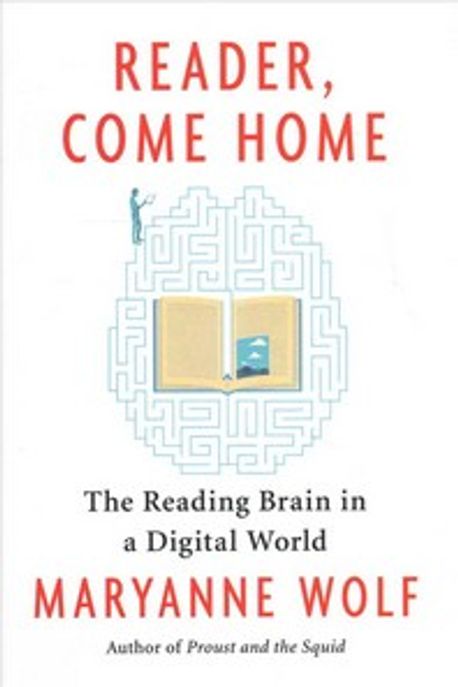
Reader, Come Home 양장본 Hardcover (The Reading Brain in a Digital World)

Wolf, Maryanne  | Harper
0원  | 20180807  | 9780062388780
From the author of Proust and the Squid, a lively, ambitious, and deeply informative epistolary book that considers the future of the reading brain and our capacity for critical thinking, empathy, and reflection as we become increasingly dependent on digital technologies. A decade ago, Maryanne Wolf’s Proust and the Squid revealed what we know about how the brain learns to read and how reading changes the way we think and feel. Since then, the ways we process written language have changed dramatically with many concerned about both their own changes and that of children. New research on the reading brain chronicles these changes in the brains of children and adults as they learn to read while immersed in a digitally dominated medium. Drawing deeply on this research, this book comprises a series of letters Wolf writes to us-her beloved readers-to describe her concerns and her hopes about what is happening to the reading brain as it unavoidably changes to adapt to digital mediums. Wolf raises difficult questions, including: Will children learn to incorporate the full range of "deep reading" processes that are at the core of the expert reading brain? Will the mix of a seemingly infinite set of distractions for children’s attention and their quick access to immediate, voluminous information alter their ability to think for themselves? With information at their fingertips, will the next generation learn to build their own storehouse of knowledge, which could impede the ability to make analogies and draw inferences from what they know? Will all these influences, in turn, change the formation in children and the use in adults of "slower" cognitive processes like critical thinking, personal reflection, imagination, and empathy that comprise deep reading and that influence both how we think and how we live our lives? Will the chain of digital influences ultimately influence the use of the critical analytical and empathic capacities necessary for a democratic society? How can we preserve deep reading processes in future iterations of the reading brain? Who are the "good readers" of every epoch? Concerns about attention span, critical reasoning, and over-reliance on technology are never just about children-Wolf herself has found that, though she is a reading expert, her ability to read deeply has been impacted as she has become, inevitably, increasingly dependent on screens. Wolf draws on neuroscience, literature, education, technology, and philosophy and blends historical, literary, and scientific facts with down-to-earth examples and warm anecdotes to illuminate complex ideas that culminate in a proposal for a biliterate reading brain. Provocative and intriguing, Reader, Come Home is a roadmap that provides a cautionary but hopeful perspective on the impact of technology on our brains and our most essential intellectual capacities?and what this could mean for our future.
9780062388773

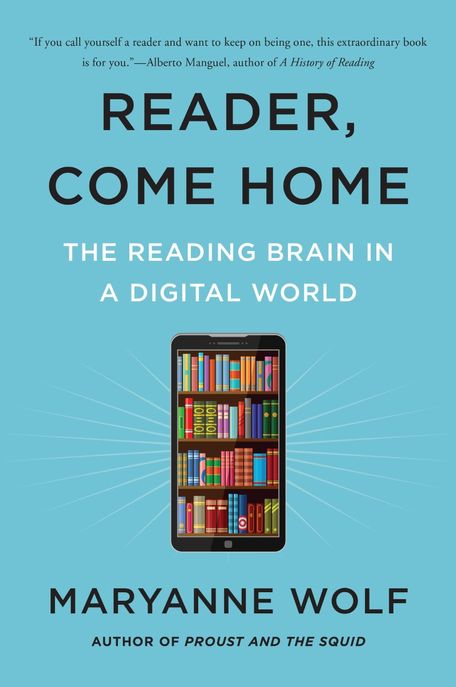
Reader, Come Home: The Reading Brain in a Digital World (The Reading Brain in a Digital World)

매리언 울프  | Harper Paperbacks
20,000원  | 20190827  | 9780062388773
From the author of Proust and the Squid, a lively, ambitious, and deeply informative epistolary book that considers the future of the reading brain and our capacity for critical thinking, empathy, and reflection as we become increasingly dependent on digital technologies. A decade ago, Maryanne Wolf’s Proust and the Squid revealed what we know about how the brain learns to read and how reading changes the way we think and feel. Since then, the ways we process written language have changed dramatically with many concerned about both their own changes and that of children. New research on the reading brain chronicles these changes in the brains of children and adults as they learn to read while immersed in a digitally dominated medium. Drawing deeply on this research, this book comprises a series of letters Wolf writes to us-her beloved readers-to describe her concerns and her hopes about what is happening to the reading brain as it unavoidably changes to adapt to digital mediums. Wolf raises difficult questions, including: Will children learn to incorporate the full range of "deep reading" processes that are at the core of the expert reading brain? Will the mix of a seemingly infinite set of distractions for children’s attention and their quick access to immediate, voluminous information alter their ability to think for themselves? With information at their fingertips, will the next generation learn to build their own storehouse of knowledge, which could impede the ability to make analogies and draw inferences from what they know? Will all these influences, in turn, change the formation in children and the use in adults of "slower" cognitive processes like critical thinking, personal reflection, imagination, and empathy that comprise deep reading and that influence both how we think and how we live our lives? Will the chain of digital influences ultimately influence the use of the critical analytical and empathic capacities necessary for a democratic society? How can we preserve deep reading processes in future iterations of the reading brain? Who are the "good readers" of every epoch? Concerns about attention span, critical reasoning, and over-reliance on technology are never just about children-Wolf herself has found that, though she is a reading expert, her ability to read deeply has been impacted as she has become, inevitably, increasingly dependent on screens. Wolf draws on neuroscience, literature, education, technology, and philosophy and blends historical, literary, and scientific facts with down-to-earth examples and warm anecdotes to illuminate complex ideas that culminate in a proposal for a biliterate reading brain. Provocative and intriguing, Reader, Come Home is a roadmap that provides a cautionary but hopeful perspective on the impact of technology on our brains and our most essential intellectual capacities-and what this could mean for our future.
9781538551943

Reader, Come Home: The Reading Brain in a Digital World (The Reading Brain in a Digital World)

매리언 울프  | HarperCollins
60,660원  | 20180807  | 9781538551943
디지털 매체는 읽는 뇌에 어떤 영향을 미치는가? 그것은 다음 세대의 운명을 어떻게 바꿀 것인가? ‘읽는 뇌’ 분야의 세계적 연구자, 『책 읽는 뇌』 저자 매리언 울프가 경고하는 ‘디지털 시대, 읽는 뇌의 위기’ [가디언] the Top stories of 2018 [뉴욕타임스], [네이처], [월스트리트 저널] 등 세계 언론이 주목한 독서의 뇌과학! “인류는 책을 읽도록 태어나지 않았다”고 단언하며 커다란 반향을 불러일으킨 매리언 울프가 신작 『다시, 책으로』에서 다시 한번 우리의 ‘읽는 뇌’에 대해 이야기한다. 이 책은 쉴 새 없이 디지털 기기에 접속하며 ‘순간접속의 시대’를 살아가는 우리의 뇌가 인류의 가장 기적적인 발명품인 읽기(독서), 그중에서도 특히 ‘깊이 읽기’ 능력을 영영 잃어버릴지도 모른다는 긴급한 경고다.
9781538551936

Reader, Come Home: The Reading Brain in a Digital World (The Reading Brain in a Digital World)

매리언 울프  | HarperCollins
45,490원  | 20180807  | 9781538551936
디지털 매체는 읽는 뇌에 어떤 영향을 미치는가? 그것은 다음 세대의 운명을 어떻게 바꿀 것인가? ‘읽는 뇌’ 분야의 세계적 연구자, 『책 읽는 뇌』 저자 매리언 울프가 경고하는 ‘디지털 시대, 읽는 뇌의 위기’ [가디언] the Top stories of 2018 [뉴욕타임스], [네이처], [월스트리트 저널] 등 세계 언론이 주목한 독서의 뇌과학! “인류는 책을 읽도록 태어나지 않았다”고 단언하며 커다란 반향을 불러일으킨 매리언 울프가 신작 『다시, 책으로』에서 다시 한번 우리의 ‘읽는 뇌’에 대해 이야기한다. 이 책은 쉴 새 없이 디지털 기기에 접속하며 ‘순간접속의 시대’를 살아가는 우리의 뇌가 인류의 가장 기적적인 발명품인 읽기(독서), 그중에서도 특히 ‘깊이 읽기’ 능력을 영영 잃어버릴지도 모른다는 긴급한 경고다.
9781538551929

Reader, Come Home Lib/E: The Reading Brain in a Digital World (The Reading Brain in a Digital World; Library Edition)

매리언 울프  | Blackstone Audiobooks
75,830원  | 20180807  | 9781538551929
디지털 매체는 읽는 뇌에 어떤 영향을 미치는가? 그것은 다음 세대의 운명을 어떻게 바꿀 것인가? ‘읽는 뇌’ 분야의 세계적 연구자, 『책 읽는 뇌』 저자 매리언 울프가 경고하는 ‘디지털 시대, 읽는 뇌의 위기’ [가디언] the Top stories of 2018 [뉴욕타임스], [네이처], [월스트리트 저널] 등 세계 언론이 주목한 독서의 뇌과학! “인류는 책을 읽도록 태어나지 않았다”고 단언하며 커다란 반향을 불러일으킨 매리언 울프가 신작 『다시, 책으로』에서 다시 한번 우리의 ‘읽는 뇌’에 대해 이야기한다. 이 책은 쉴 새 없이 디지털 기기에 접속하며 ‘순간접속의 시대’를 살아가는 우리의 뇌가 인류의 가장 기적적인 발명품인 읽기(독서), 그중에서도 특히 ‘깊이 읽기’ 능력을 영영 잃어버릴지도 모른다는 긴급한 경고다.
1
최근 본 책