

















책 이미지

책 정보
· 분류 : 외국도서 > 언어학 > 언어학 > 역사/비교
· ISBN : 9780367482459
· 쪽수 : 344쪽
· 출판일 : 2021-04-30
목차
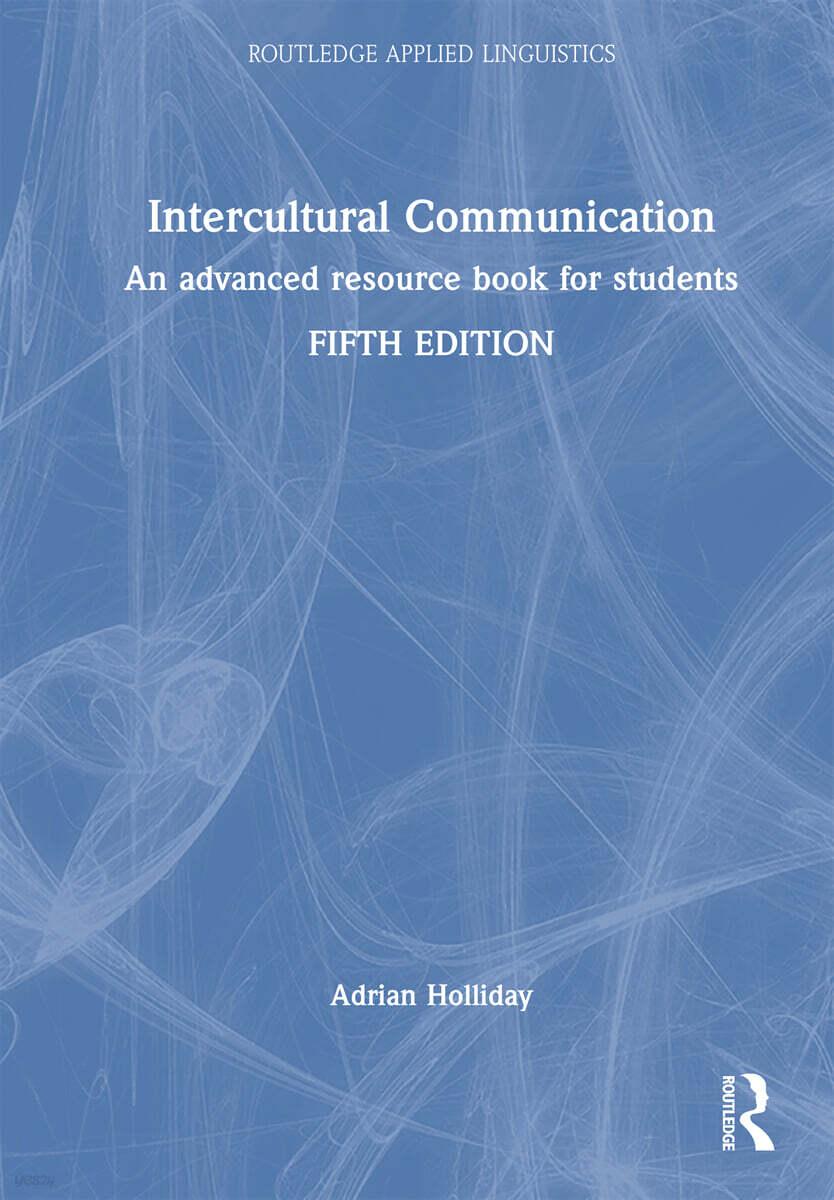
SECTION A: INTRODUCTION ? DEFINING CONCEPTS THEME 1 IDENTITY Unit A1.1 People like me Unit A1.2 Artefacts of culture Unit A1.3 Identity card THEME 2 ADDRESSING THE OTHER Unit A2.1 Communication is about not presuming Unit A2.2 Stamping Identity on new language. Finding intercultural threads Unit A2.3 Power and discourse THEME 3 REPRESENTATION Unit A3.1 Cultural refugee Unit A3.2 Complex images Unit A3.3 The paradoxes of institutional life Unit A3.4 Disciplines for intercultural communication SECTION B: EXTENSION INTRODUCTION Unit B0.1 Current and Previous Approaches to the Study of Intercultural Communication B0.1.1 Martin & Nakayama, ‘Thinking dialectically about culture and communication’ B0.1.2 Miike, ‘Intercultural communication ethics: an Asiacentric perspective’ Unit B0.2 Essentialist and Non- Essentialist Approaches to ‘Culture’ B0.2.1 Holliday, The Struggle to Teach English as an International Language B02.2 Langstedt, ‘Culture, an excuse? ?A critical analysis of essentialist assumptions in cross-cultural management research and practice’ THEME 1 IDENTITY Unit B.1.1 Questions of identity B1.1.1 Appiah, The Ties that Bind: Rethinking Identity: Creed, Country, Colour, Class, Culture B1.1.2 Giddens, Modernity and Self-Identity: Self and Society in the Late Modern Age B1.1.3 Baumann, Contesting Culture Unit B.1.2 Discourse and identity B1.2.1 De Fina, ‘Group identity, narrative and self-representations’ B1.2.2 Gee, An Introduction to Discourse Analysis: Theory and Method Unit B.1.3 Cosmopolitanism and identity B1.3.1 Sobre-Denton & Bardhan, Cultivating Cosmopolitanism for Intercultural Communication B1.3.2 Skovgaard- Smith & Poulfelt, ‘Imagining ‘non-nationality’: Cosmopolitanism as a source of identity and belonging’ Unit B.1.4 Discourse, identity and intercultural communication B1.4.1 Scollon & Scollon, ‘Discourse and intercultural communication’ 1.4.2 Roberts & Sarangi, ‘Theme-oriented discourse analysis of medical encounters’ Unit B1.5 Identity and language learning B1.5.1 Pellegrino, Study Abroad and Second Language Use B1.5.2 Pavlenko and Lantolf, ‘Second language learning as participation and the (re) construction of selves’ THEME 2 OTHERING Unit B2.1 Othering ? Spotlight on Africa B2.1.1 Edgar & Sedgwick, Key Concepts in Cultural Theory B2.1.2 Ademolu & Warrington, ‘Who Gets to Talk About NGO Images of Global Poverty?’ B2.1.3 Ademolu, ‘Seeing and Being the Visualised 'Other': Humanitarian Representations and Hybridity in African Diaspora Identities’ Unit B2.2 Othering of Outsiders in China and Self- Othering of ‘Chinese Australians’ B 2.2.1 Liu,Y. & Self, ‘Laowai as a discourse of Othering: unnoticed stereotyping of American expatriates in Mainland China’ B 2.2.2 Liu, H., ‘Beneath the white gaze: Strategic Self-Orientalism among Chinese Australians’. Unit B2.3 Power and the Other in Intercultural Communication: Voluntourism B2.3.1 Jakubiak, ‘"English Is Out There?You Have to Get with the Program": Linguistic Instrumentalism, Global Citizenship Education, and English-Language Voluntourism’. B2.3.2 McAllum & Zahra, ‘The positive impact of othering in voluntourism: The role of the relational other in becoming another self’ Unit B2.4 The English Language and The Other B2.4.1 Neeley, ‘Language Matters: Status Loss and Achieved Status Distinctions in Global Organizations’ B 2.4.2 Shuck, ‘Racialising the non-native English speaker’ 146 B2.4.3 Lee Su Kim, A Nyonya in Texas: Insights of a Straits Chinese Woman in the Lone Star State THEME 3 REPRESENTATION Unit B3.1 Representation and Self- Representation: Intersectionality and Co-Cultural Theory B3.1.1 Lucke, Engstrand, & Zander ‘Desilencing Complexities: Addressing Categorization in Cross-Cultural Management with Intersectionality and Relationality’. B3.1.2 Zirulnik & Orbe ‘Black Female Pilot Communicative Experiences Applications and Extensions of Co-Cultural Theory’ Unit B3.2 Self - representation online B3.2.1 Veum & Moland ‘The selfie as a global discourse’ B3.2.2 Brooks & Pitts, ‘Communication and identity management in a globally connected classroom: An online international and intercultural learning experience’. Unit B3.3 Representation in the media ? The case of ‘asylum seekers’ B3.3.1: van Dijk, ‘New(s) racism: a discourse analytical approach’ B3.3.2: O'Sullivan, Hartley, Saunders, Montgomery & Fiske, Key Concepts in Communication and Cultural Studies B3.3.3: Moloney G, ‘Social representations and the politically satirical cartoon:the construction and reproduction of the refugee and asylum-seeker identity’ Unit B3.4 Cultural constructs in intercultural training B3.4.1 Triandis, Individualism and Collectivism Extract 1 B3.4.2 Triandis, Individualism and Collectivism Extract 2 B3.4.3: Shepherd, ‘Cultural awareness workshops: limitations and practical consequences’ Unit B3.5 Challenging constructs in intercultural training and education B3.5.1 Holmes, ‘The cultural stuff around how to talk to people’: immigrants’ intercultural communication during a pre-employment work-placement’ B3.5.2 Holliday, ‘Difference and awareness in cultural travel: negotiating blocks and threads’ SECTION C: EXPLORATION THEME 1 IDENTITY Unit C1.1 The story of the self Unit C1.2 Becoming the self by defining the Other Unit C1.3 Undoing cultural fundamentalism Unit C1.4 Investigating discourse and power Unit C1.5 Locality and transcendence of locality: Factors in identity formation THEME 2 OTHERING Unit C2.1 Othering Unit C2.2 ‘As you speak, therefore you are’ Unit C2.3 The ‘located’ self Unit C2.4 Integrating the Other Unit C2.5 ‘Are you what you are supposed to be?’ THEME 3 REPRESENTATION Unit C3.1 ‘You are, therefore I am’ Unit C3.2 ‘Schemas’: fixed or flexible? Unit C3.3 ‘What’s underneath?’ Unit C3.4 ‘Manufacturing the self’ Unit C3.5 ‘Minimal clues lead to big conclusions’