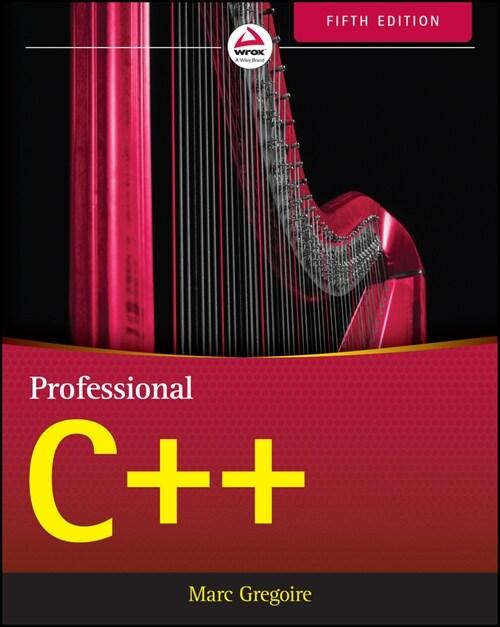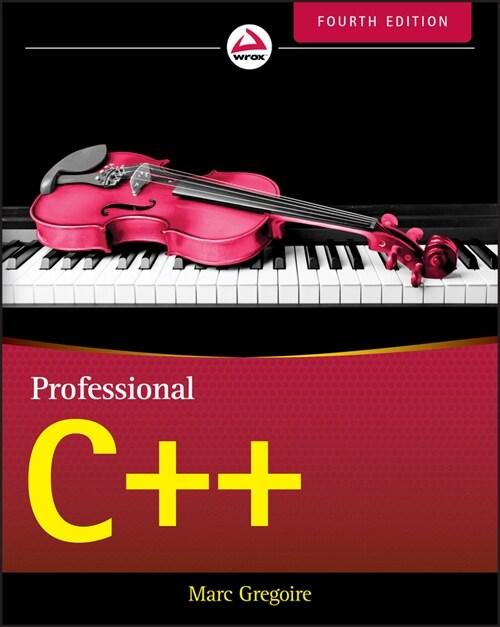


















책 이미지

책 정보
· 분류 : 외국도서 > 컴퓨터 > 프로그래밍 언어 > C
· ISBN : 9781118858059
· 쪽수 : 984쪽
· 출판일 : 2014-09-09
목차
INTRODUCTION xli
Part I: INTRODUCTION TO PROFESSIONAL C++
CHAPTER 1: A CRA SH COURSE IN C++ AND THE STL 3
The Basics of C++ 4
Diving Deeper into C++ 25
C++ as an Object-Oriented Language 34
Summary 46
CHAPTER 2: WORKING WITH STRINGS 47
Dynamic Strings 47
Summary 55
CHAPTER 3: CODING WITH STYLE 57
Naming 68
Formatting 72
Summary 75
Part II: PROFESSIONAL C++ SOFTWAR E DESIGN
CHAPTER 4: DESIGNING PROFESSIONAL C++ PROGRA MS 79
What Is Programming Design? 80
The Importance of Programming Design 80
Designing for C++ 82
Two Rules for C++ Design 83
Reusing Code 87
Deciding Whether or Not to Use the STL 98
Designing with Patterns and Techniques 98
Designing a Chess Program 99
Summary 105
CHAPTER 5: DESIGNING WITH OBJECTS 107
Am I Thinking Procedurally? 108
The Object-Oriented Philosophy 108
Living in a World of Objects 111
Abstraction 122
Summary 126
CHAPTER 6: DESIGNING FOR REUSE 127
The Reuse Philosophy 127
How to Design Reusable Code 128
Summary 140
Part III: CODING THE PROFESSIONAL WAY
CHAPTER 7: GAINING PROFICIENCY WITH CLASSES AND OBJECTS 143
Introducing the Spreadsheet Example 144
Writing Classes 144
Summary 175
CHAPTER 8: MASTERING CLASSES AND OBJECTS 177
Dynamic Memory Allocation in Objects 178
Different Kinds of Data Members 188
More about Methods 193
Nested Classes 199
Enumerated Types Inside Classes 201
Friends 202
Operator Overloading 203
Summary 215
CHAPTER 9: DISCOVERING INHERITANCE TECHNIQUES 217
Building Classes with Inheritance 218
Multiple Inheritance 244
Interesting and Obscure Inheritance Issues 249
Summary 271
CHAPTER 10: C++ QUIRKS, ODDITIES, AND INCIDENTALS 273
References 274
Types and Casts 295
Summary of Casts 301
Scope Resolution 302
C++11 / C++14 303
Header Files 309
C Utilities 310
Summary 313
CHAPTER 11: WRITING GENERIC CODE WITH TEMPLATES 315
Overview of Templates 316
Class Templates 317
Function Templates 339
Variable Templates 343
Summary 343
CHAPTER 12: DEMYSTIFYING C++ I/O 345
Using Streams 346
String Streams 360
File Streams 362
Bidirectional I/O 366
Summary 367
CHAPTER 13: HANDLING ERR ORS 369
Errors and Exceptions 370
Exception Mechanics 372
Exceptions and Polymorphism 387
Stack Unwinding and Cleanup 394
Common Error-Handling Issues 397
Putting It All Together 405
Summary 409
CHAPTER 14: OVERLOADING C++ OPERA TORS 411
Overview of Operator Overloading 412
Overloading the Arithmetic Operators 420
Overloading the Bitwise and Binary Logical Operators 421
Overloading the Insertion and Extraction Operators 422
Overloading the Subscripting Operator 423
Overloading the Function Call Operator 428
Overloading the Dereferencing Operators 429
Writing Conversion Operators 432
Overloading the Memory Allocation and Deallocation Operators 436
Summary 442
CHAPTER 15: OVERVIEW OF THE C++ STANDARD LIBRARY 443
Coding Principles 444
Overview of the C++ Standard Library 445
Summary 465
CHAPTER 16: UNDERSTANDING CONTAINERS AND ITERATORS 467
Containers Overview 468
Sequential Containers 473
Container Adapters 498
Associative Containers 504
Unordered Associative Containers/Hash Tables 516
Other Containers 523
Summary 529
CHAPTER 17: MASTERING STL ALGORITHMS 531
Overview of Algorithms 532
Lambda Expressions 536
Function Objects 542
Algorithm Details 550
Algorithms Example: Auditing Voter Registrations 570
Summary 573
CHAPTER 18: STRING LOCALIZATION AND REGULAR EXPRESSIONS 575
Localization 575
Regular Expressions 581
ECMAScript Syntax 582
Summary 599
CHAPTER 19: ADDITIONAL LIBRARY UTILITIES 601
std::function 601
Ratios 603
The Chrono Library 606
Random Number Generation 612
Tuples 621
Summary 624
Part IV: MASTERING ADVANCED FEATURES OF C++
CHAPTER 20: CUSTOMIZING AND EXTENDING THE STL 627
Allocators 628
Iterator Adapters 628
Extending the STL 634
Summary 671
CHAPTER 21: ADVANCED TEMPLATES 673
More about Template Parameters 673
Class Template Partial Specialization 679
Emulating Function Partial Specialization with Overloading 683
Template Recursion 685
Type Inference 689
Variadic Templates 691
Metaprogramming 695
Summary 705
CHAPTER 22: MEMORY MANAGEMENT 707
Working with Dynamic Memory 708
Array-Pointer Duality 720
Low-Level Memory Operations 722
Smart Pointers 727
Common Memory Pitfalls 734
Summary 740
CHAPTER 23: MULTITHREADED PROGRAMMING WITH C++ 741
Introduction 742
Threads 746
Atomic Operations Library 755
Mutual Exclusion 758
Condition Variables 767
Futures 770
Example: Multithreaded Logger Class 772
Thread Pools 776
Threading Design and Best Practices 777
Summary 778
Part V: C++ SOFTWAR E ENGINEERING
CHAPTER 24: MAXIMIZING SOFTWARE ENGINEERING METHODS 781
The Need for Process 782
Software Life Cycle Models 783
Software Engineering Methodologies 789
Building Your Own Process and Methodology 796
Source Code Control 797
Summary 799
CHAPTER 25: WRITING EFFICIENT C++ 801
Overview of Performance and Efficiency 802
Language-Level Efficiency 803
Design-Level Efficiency 808
Profiling 813
Summary 825
CHAPTER 26: CONQUERING DEBUGGING 827
The Fundamental Law of Debugging 828
Bug Taxonomies 828
Avoiding Bugs 828
Planning for Bugs 829
Debugging Techniques 842
Summary 861
APPENDIX A: C++ INTERVIEWS 863
Chapter 1: A Crash Course in C++ and the STL 863
Chapters 2 and 18: Strings, Localization, and Regular Expressions 864
Chapter 3: Coding with Style 865
Chapter 4: Designing Professional C++ Programs 866
Chapter 5: Designing with Objects 868
Chapter 6: Designing for Reuse 868
Chapters 7 and 8: Classes and Objects 869
Chapter 9: Discovering Inheritance Techniques 872
Chapter 10: C++ Quirks, Oddities, and Incidentals 873
Chapters 11 and 21: Templates 875
Chapter 12: Demystifying C++ I/O 875
Chapter 13: Handling Errors 876
Chapter 14: Overloading C++ Operators 877
Chapters 15, 16, 17, and 20: The Standard Template Library 878
Chapter 19: Additional Library Utilities 878
Chapter 22: Memory Management 879
Chapter 23: Multithreaded Programming with C++ 880
Chapter 24: Maximizing Software Engineering Methods 881
Chapter 25: Writing Efficient C++ 882
Chapter 26: Conquering Debugging 882
APPENDIX B: ANNOTATED BIBLIOGRAPHY 885
C++ 885
C 889
Unified Modeling Language, Uml 889
Algorithms and Data Structures 890
Random Numbers 890
Open-Source Software 890
Software Engineering Methodology 891
Programming Style 892
Computer Architecture 892
Efficiency 893
Testing 893
Debugging 893
Design Patterns 893
Operating Systems 894
Multithreaded Programming 894
APPENDIX C: STANDARD LIBRARY HEADER FILES 895
The C Standard Library 895
Containers 897
Algorithms, Iterators, and Allocators 898
General Utilities 898
Mathematical Utilities 899
Exceptions 899
I/O Streams 900
Threading Library 901
INDEX 903