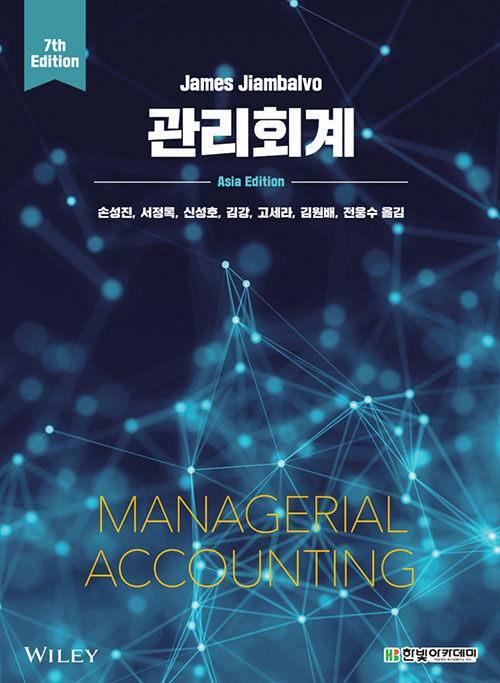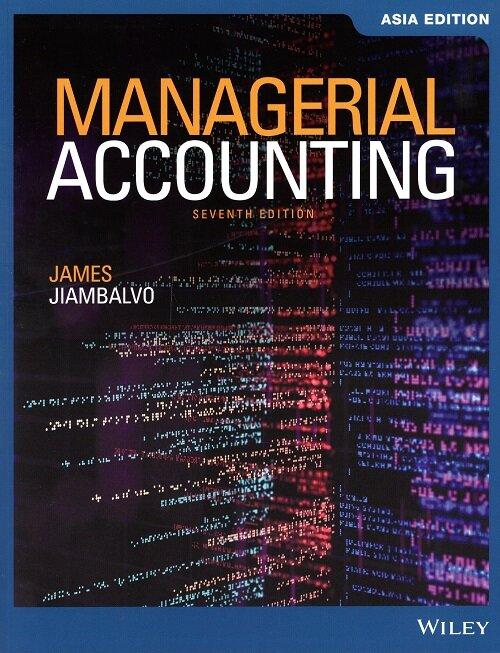


















책 이미지

책 정보
· 분류 : 외국도서 > 경제경영 > 재무/회계 > 관리
· ISBN : 9781119577720
· 쪽수 : 496쪽
· 출판일 : 2019-10-15
목차
1 Managerial Accounting in the Information Age 1-1
Goal of Managerial Accounting 1-2
Cost Terms Used in Discussing Planning, Control, and Decision Making 1-7
Two Key Ideas in Managerial Accounting 1-10
The Information Age and Managerial Accounting 1-13
Ethical Considerations in Managerial Decision Making 1-17
The Controller as the Top Management Accountant 1-20
Chapter Review: Summary of Learning Objectives / Review Problems / Key Terms / Self-Assessment 1-22
End-of-Chapter Homework: Questions / Exercises / Problems / Cases 1-25
Appendix: IMA Statement of Ethical Professional Practice 1-32
2 Job-Order Costing for Manufacturing and Service Companies 2-1
Cost Classifications for Manufacturing Firms 2-2
Product Cost Information in Financial Reporting and Decision Making 2-6
Balance Sheet Presentation of Product Costs 2-7
Flow of Product Costs in Accounts 2-8
Income Statement Presentation of Product Costs 2-8
Types of Costing Systems 2-11
Overview of Job Costs and Financial Statement Accounts 2-11
Job-Order Costing System 2-13
Eastlake Revisited: Using Job Cost Information 2-18
Relation Between the Costs of Jobs and the Flow of Costs in Work in Process, Finished Goods, and Cost of Goods Sold 2-19
Allocating Overhead to Jobs: A Closer Look 2-20
Predetermined Overhead Rates 2-21
Job-Order Costing for Service Companies 2-24
Modern Manufacturing Practices and Product Costing Systems 2-27
Chapter Review: Summary of Learning Objectives / Review Problems / Key Terms / Self-Assessment 2-30
End-of-Chapter Homework: Questions / Exercises / Problems / Cases 2-35
3 Process Costing 3-1
Difference between Job-Order and Process Costing Systems 3-2
Product and Cost Flows 3-3
Calculating Unit Cost 3-6
Calculating and Applying Cost per Equivalent Unit: Mixing Department Example 3-7
Production Cost Report 3-9
Basic Steps in Process Costing: A Summary 3-11
Kent Chemical Revisited: Answering Stacy’s Question 3-12
Dealing with Transferred-in Cost: Packaging Department Example 3-12
Process Costing and Incremental Analysis 3-14
“You Get What You Measure!” and Manufacturing Processes 3-15
Chapter Review: Summary of Learning Objectives / Review Problems / Key Terms / Self-Assessment 3-16
End-of-Chapter Homework: Questions / Exercises / Problems / Cases 3-20
4 Cost-Volume-Profit Analysis 4-1
Common Cost Behavior Patterns 4-2
Cost Estimation Methods 4-6
Cost-Volume-Profit Analysis 4-14
Multiproduct Analysis 4-19
Assumptions in CVP Analysis 4-23
Codeconnect Example Revisited: Answering Mary’s Questions 4-23
Operating Leverage 4-24
Constraints 4-25
Chapter Review: Summary of Learning Objectives / Review Problems / Key Terms / Self-Assessment 4-26
End-of-chapter Homework: Questions / Exercises / Problems / Cases 4-30
Appendix: Using Regression in Microsoft Excel to Estimate Fixed and Variable Costs 4-46
5 Variable Costing 5-1
Full (Absorption) and Variable Costing 5-2
Effects of Production on Income for Full Versus Variable Costing: The Clausentube Example 5-5
Benefits of Variable Costing for Internal Reporting 5-12
Variable Costing Limits Management of Earnings via Production Volume 5-12
Chapter Review: Summary of Learning Objectives / Review Problems / Key Terms / Self-Assessment 5-13
End-of-Chapter Homework: Questions / Exercises / Problems / Cases 5-17
6 Cost Allocation and Activity-Based Costing 6-1
Purposes of Cost Allocation 6-2
Process of Cost Allocation 6-5
Allocating Service Department Costs 6-8
Problems with Cost Allocation 6-10
Activity-Based Costing 6-14
Activity-Based Management 6-23
Remember—You Get What You Measure! 6-24
Chapter Review: Summary of Learning Objectives / Review Problems / Key Terms / Self-Assessment 6-25
End-of-Chapter Homework: Questions / Exercises / Problems / Cases 6-29
Appendix: Activity-Based Management 6-46
7 The Use of Cost Information in Management Decision Making 7-1
Incremental Analysis 7-2
Analysis of Decisions Faced by Managers 7-5
Decisions Involving Joint Costs 7-14
Qualitative Considerations in Decision Analysis 7-17
Chapter Review: Summary of Learning Objectives / Review Problems / Key Terms / Self-Assessment 7-18
End-of-Chapter Homework: Questions / Exercises / Problems / Cases 7-21
Appendix: The Theory of Constraints 7-34
8 Pricing Decisions, Customer Profitability Analysis, and Activity-Based Pricing 8-1
The Profit-Maximizing Price 8-2
Pricing Special Orders 8-4
Cost-Plus Pricing 8-5
Target Costing 8-7
Analyzing Customer Profitability: Revisiting the Priced Right Office Supplies Case 8-8
Customer Profitability and Performance Measures 8-11
Activity-Based Pricing 8-11
Chapter Review: Summary of Learning Objectives / Review Problems / Key Terms / Self-Assessment 8-12
End-of-Chapter Homework: Questions / Exercises / Problems / Cases 8-19
9 Capital Budgeting and Other Long-Run Decisions 9-1
Capital Budgeting Decisions 9-2
Evaluating Investment Opportunities: Time Value of Money Approaches 9-3
Considering “Soft” Benefits in Investment Decisions 9-11
Estimating the Required Rate of Return 9-13
Additional Cash Flow Considerations 9-14
Other Long-Run Decisions 9-17
Simplified Approaches to Capital Budgeting 9-18
Conflict between Performance Evaluation and Capital Budgeting 9-21
Wilson Air Example Revisited 9-23
Chapter Review: Summary of Learning Objectives / Review Problems / Key Terms / Self-Assessment 9-24
End-of-Chapter Homework: Questions / Exercises / Problems / Cases 9-27
Appendix A: Using Microsoft Excel to Calculate NPV and IRR 9-36
Appendix B 9-39
10 Budgetary Planning and Control 10-1
Use of Budgets in Planning and Control 10-2
Developing the Budget 10-4
The Master Budget 10-5
Use of Computers in the Budget Planning Process 10-14
Budgetary Control 10-14
Investigating Budget Variances 10-17
Conflict in Planning and Control Uses of Budgets 10-18
Evaluation, Measurement, and Management Behavior 10-19
The Preston Joystick Case Revisited 10-20
Chapter Review: Summary of Learning Objectives / Review Problems / Key Terms / Self-Assessment 10-20
End-of-Chapter Homework: Questions / Exercises / Problems / Cases 10-26
11 Standard Costs and Variance Analysis 11-1
Standard Costs 11-2
A General Approach to Variance Analysis 11-5
Material Variances 11-5
Direct Labor Variances 11-7
Overhead Variances 11-8
Test Your Knowledge: Comprehensive Example 11-13
Investigation of Standard Cost Variances 11-16
Responsibility Accounting and Variances 11-19
Chapter Review: Summary of Learning Objectives / Review Problems / Key Terms / Self-Assessment 11-19
End-of-Chapter Homework: Questions / Exercises / Problems / Cases 11-23
Appendix: Recording Standard Costs in Accounts 11-33
12 Decentralization and Performance Evaluation 12-1
Why Firms Decentralize 12-2
Why Companies Evaluate the Performance of Subunits and Subunit Managers 12-4
Cost Centers, Profit Centers, and Investment Centers 12-6
Evaluating Investment Centers with ROI 12-8
Evaluation Using Economic Value Added (EVA) 12-13
Using a Balanced Scorecard to Evaluate Performance 12-18
Developing a Strategy Map for a Balanced Scorecard 12-21
Keys to a Successful Balanced Scorecard: Targets, Initiatives, Responsibility, Funding, Top Management Support 12-22
Chapter Review: Summary of Learning Objectives / Review Problems / Key Terms / Self-Assessment 12-23
End-of-chapter Homework: Questions / Exercises / Problems / Cases 12-28
Appendix: Transfer Pricing 12-39
Glossary G-1
Index I-1
Chapters 13 & 14 Available in WileyPLUS
13 Statement of Cash Flows 13-1
Need for a Statement of Cash Flows 13-2
Types of Business Activities and the Classification of Cash Flows 13-2
The Statement of Cash Flows Prepared Using the Direct Method 13-5
Preparing the Statement of Cash Flows Using the Indirect Method 13-9
Interpreting Information in the Statement of Cash Flows: The Situation at Ravira Restaurant Supply 13-13
Chapter Review: Summary of Learning Objectives / Review Problems / Key Terms / Self-Assessment 13-14
End-of-Chapter Homework: Questions / Exercises / Problems / Case 13-18
14 Analyzing Financial Statements: A Managerial Perspective 14-1
Why Managers Analyze Financial Statements 14-2
Horizontal and Vertical Analyses 14-4
Earnings Management and the Need to Compare Earnings and Cash-Flow Information 14-7
Other Sources of Information on Financial Performance 14-9
Ratio Analysis 14-10
A Managerial Perspective on the Analysis of HGW’S Financial Statements 14-14
Summary of Analyses 14-16
Chapter Review: Summary of Learning Objectives / Review Problems / Key Terms / Self-Assessment 14-17
End-of-chapter Homework: Questions / Exercises / Problems / Cases 14-21