

















책 이미지

책 정보
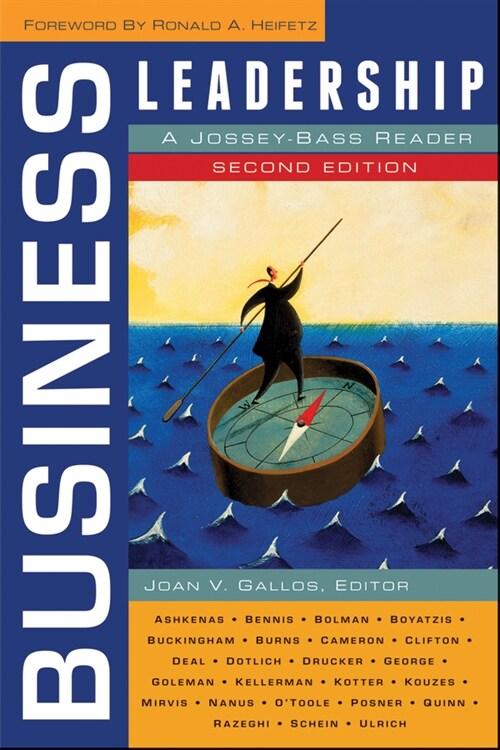
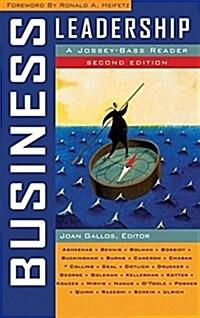
· 분류 : 외국도서 > 경제경영 > 조직행동
· ISBN : 9780787984267
· 쪽수 : 1088쪽
· 출판일 : 2006-08-01
목차
Foreword: Observations on the State of Organization Development (Edgar H. Schein).
Introduction (Joan V. Gallos).
About the Editor.
Part One: The OD Field: Setting the Context, Understanding the Legacy.
Editor’s Interlude.
Historical Roots.
1 What Is Organization Development? (Richard Beckhard).
2 Where Did OD Come From? (W.Warner Burke).
Evolution of the Field
3 Revolutions in OD: The New and the New, New Things (Philip H.Mirvis).
Theory Versus Practice
4 Theories and Practices of Organizational Development (John R. Austin and Jean M. Bartunek).
Part Two: The OD Core: Understanding and Managing Planned Change.
Editor’s Interlude.
Understanding Planned Change.
5 Kurt Lewin and the Planned Approach to Change: A Reappraisal (Bernard Burnes).
Intervention Theory.
6 Effective Intervention Activity (Chris Argyris).
Action Technologies
7 Action Research: Rethinking Lewin (Linda Dickens and Karen Watkins).
8 Action Learning and Action Science: Are They Different? (Joseph A. Raelin).
Appreciative Inquiry.
9 Toward a Theory of Positive Organizational Change (David L. Cooperrider and Leslie E. Sekerka).
Models of Change.
10 Leading Change:Why Transformation Efforts Fail (John P. Kotter).
11 The Congruence Model of Change (David A. Nadler).
Part Three: The OD Process: Diagnosis, Intervention, and Levels of Engagement.
Editor’s Interlude.
Individual.
12 Teaching Smart People How to Learn (Chris Argyris).
Small Group.
13 Facilitative Process Interventions: Task Processes in Groups (Edgar H. Schein).
Large Group.
14 Large Group Interventions and Dynamics (Barbara Bunker and Billie Alban).
Intergroup.
15 Understanding the Power of Position: A Diagnostic Model (Michael J. Sales).
Organization.
16 Reframing Complexity: A Four-Dimensional Approach to Organizational Diagnosis, Development, and Change (Joan V. Gallos).
Part Four:OD Consulting: Leading Change from the Outside.
Editor’s Interlude.
Consulting Process.
17 Masterful Consulting (Keith Merron).
Consulting Phases and Tasks.
18 Flawless Consulting (Peter Block).
Contracting.
19 The Organization Development Contract (Marvin Weisbord).
Facilitation.
20 The Facilitator and Other Facilitative Roles (Roger Schwarz).
Coaching.
21 The Right Coach (Howard Morgan, Phil Harkins,Marshall Goldsmith).
Part Five:OD Leadership: Fostering Change from the Inside.
Editor’s Interlude.
Understanding Options and Challenges.
22 Reframing Change: Training, Realigning, Negotiating, Grieving, and Moving On (Lee G. Bolman and Terrence E. Deal).
Leading as the Internal Consultant.
23 What Constitutes an Effective Internal Consultant? (Alan Weiss).
Leading as the Boss.
24 Reversing the Lens: Dealing with Different Styles When You Are the Boss (Gene Boccialetti).
Leading the Boss.
25 Relations with Superiors: The Challenge of “Managing” a Boss (John Kotter).
Building Support.
26 Enlist Others (James Kouzes and Barry Posner).
Part Six: OD Focus: Organizational Intervention Targets.
Editor’s Interlude.
Strategy.
27 Business Strategy: Creating the Winning Formula (Edward E. Lawler).
Organizational Design.
28 Matching Strategy and Structure (Jay Galbraith).
Structure of Work.
29 Designing Work: Structure and Process for Learning and Self-Control (Marvin Weisbord).
Workspace Design.
30 Making It Happen: Turning Workplace Vision into Reality (Franklin Becker and Fritz Steele).
Culture.
31 So How Can You Assess Your Corporate Culture? (Edgar H. Schein).
Workforce Development.
32 What Makes People Effective? (Edward E. Lawler).
Team Development.
33 What Makes a Team Effective or Ineffective? (Glenn M. Parker).
Leadership Development.
34 Developing the Individual Leader (Jay Conger and Beth Benjamin).
Part Seven: OD Purpose and Possibilities: Seeing the Forest for the Trees.
Editor’s Interlude.
Fostering Mission and Commitment.
35 Creating a Community of Leaders (Phillip H.Mirvis and Louis “Tex” Gunning).
Integrating Systems.
36 Designing High-Performance Work Systems: Organizing People,Work, Technology, and Information (David A. Nadler and Marc S. Gerstein).
Utilizing Diversity.
37 Diversity as Strategy (David A. Thomas).
Creating Learning Organizations.
38 The Leader’s New Work: Building Learning Organizations (Peter M. Senge).
Creating Humane Organizations.
39 Compassion in Organizational Life (Jason M. Kanov, Sally Maitlis,Monica C.Worline, Jane E. Dutton, Peter J. Frost, Jacoba M. Lilius).
Fostering Growth and Development.
40 Generating Simultaneous Personal, Team, and Organization Development (William R. Torbert).
Part Eight: OD and the Future: Embracing Change and New Directions.
Editor’s Interlude.
CHANGES IN THE FIELD.
Practitioner Perspective.
41 Emerging Directions: Is There a New OD? (Robert J.Marshak).
Scholarly Perspective.
42 The Future of OD? (David L. Bradford and W.Warner Burke).
CHANGES IN THE EXTERNAL ENVIRONMENT.
The Digital Revolution.
43 From Cells to Communities: Deconstructing and Reconstructing the Organization (Rosabeth Moss Kanter).
Globalization.
44 Actions for Global Learners, Launchers, and Leaders (Ron Ashkenas, Dave Ulrich, Todd Jick, Steve Kerr).
Knowledge Management.
45 Knowledge-Worker Productivity: The Biggest Challenge (Peter F. Drucker).
Sustainability and the Environment.
46 Beyond Greening: Strategies for a Sustainable World (Stuart L. Hart).
Organizational Values.
47 The Healthy Organization (Richard Beckhard).
References.
Name Index.
Subject Index.