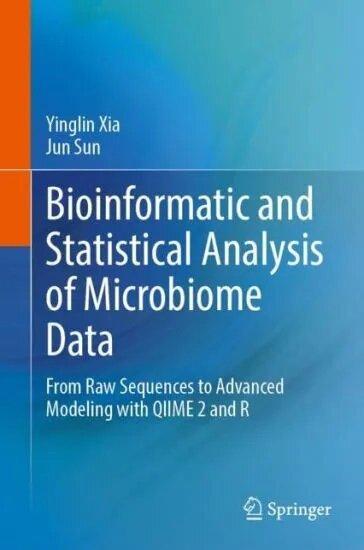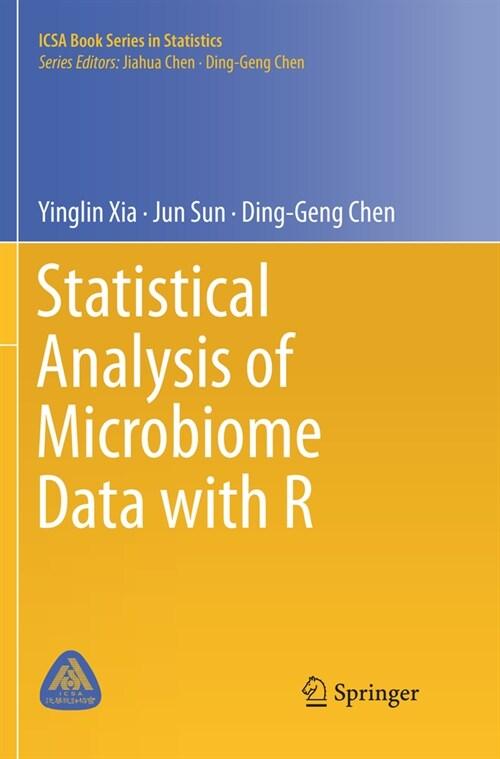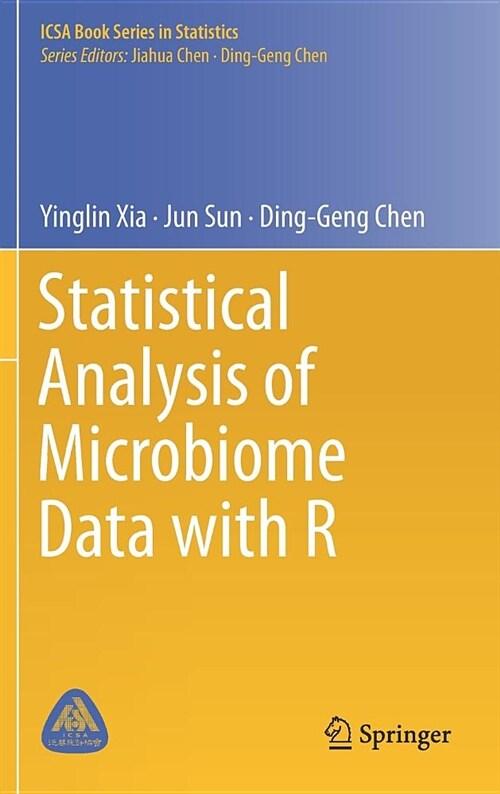


















책 이미지

책 정보
· 분류 : 외국도서 > 과학/수학/생태 > 수학 > 확률과 통계 > 일반
· ISBN : 9781041220138
· 쪽수 : 1192쪽
· 출판일 : 2026-02-25
목차
Applied Microbiome Statistics: Correlation, Association, Interaction and Composition
Preface? Acknowledgements? About the Authors? 1. Introduction to Microbiome Statistics? 2. Classical Parametric Correlation? 3. Classical Nonparametric Correlation? 4. Composition Barplots? 5. Composition Heatmaps? 6. Correlation Heatmaps and plots? 7. Model Selection for Correlation and Association Analysis? 8. Alpha Diversity-Based Association Analysis? 9. Beta Diversity-Based Association Analysis? 10. Multiple Comparisons and Multiple Hypothesis Testing? 11. Multiple Comparisons and Multiple Hypothesis Testing in Microbiome Research? 12. Linear Discriminant Analysis Effect Size (LEfSe)? 13. Sparse and Compositional Methods for Inferencing Microbial Interactions? 14. Network Construction and Comparison for Microbiome Data? 15. Microbial Networks in Semi-Parametric Rank-Based Correlation and Partial Correlation Estimation? References
?
Machine Learning for Microbiome Statistics
Preface Acknowledgements About the Authors Chapter 1 Introduction to Machine Learning Chapter 2 Overview of Machine Learning in Microbiome Research Chapter 3 Accessing Model Accuracy and Goodness of Fit Tests for Normality Chapter 4 Overfitting and Underfitting Chapter 5 Assessing Model Accuracy Using Cross-Validation Chapter 6 Feature Engineering and Model Selection Chapter 7 Logistic Regression Chapter 8 Support Vector Machines Chapter 9 Classification Trees Chapter 10 Random Forest Chapter 11 The Evolution of Tree-Based Algorithms Chapter 12 Extreme Gradient Boosting (XGBoost) Chapter 13 Artificial Neural Networks and Deep Learning Chapter 14 Machine Learning Microbiome with SIAMCAT Chapter 15 Basic Performance Metrics for Machine Learning Models Chapter 16 Matthews Correlation Coefficient Chapter 17 Area Under the Receiver Operating Characteristic Curve (AUC-ROC) Chapter 18 Area Under the Precision-Recall Curve (AUC-PR) Chapter 19 Comparisons of Machine Learning Classification Models with Tidymodels