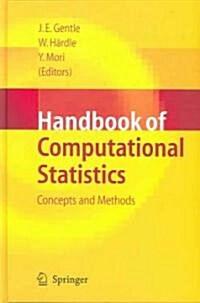


















책 이미지

책 정보
· 분류 : 외국도서 > 과학/수학/생태 > 수학 > 확률과 통계 > 일반
· ISBN : 9783319648668
· 쪽수 : 648쪽
· 출판일 : 2017-10-21
목차
Part I Linear Algebra 1 Basic Vector/Matrix Structure and Notation 1.1 Vectors 1.2 Arrays 1.3 Matrices 1.4 Representation of Data 2 Vectors and Vector Spaces 2.1 Operations on Vectors 2.1.1 Linear Combinations and Linear Independence 2.1.2 Vector Spaces and Spaces of Vectors 2.1.3 Basis Sets for Vector Spaces 2.1.4 Inner Products 2.1.5 Norms 2.1.6 Normalized Vectors 2.1.7 Metrics and Distances 2.1.8 Orthogonal Vectors and Orthogonal Vector Spaces 2.1.9 The "One Vector" 2.2 Cartesian Coordinates and Geometrical Properties of Vectors 2.2.1 Cartesian Geometry 2.2.2 Projections 2.2.3 Angles between Vectors 2.2.4 Orthogonalization Transformations; Gram-Schmidt . 2.2.5 Orthonormal Basis Sets 2.2.6 Approximation of Vectors 2.2.7 Flats, Affine Spaces, and Hyperplanes 2.2.8 Cones 2.2.9 Cross Products in IR3 2.3 Centered Vectors and Variances and Covariances of Vectors 2.3.1 The Mean and Centered Vectors 2.3.2 The Standard Deviation, the Variance, andScaled Vectors 2.3.3 Covariances and Correlations between Vectors Exercises 3 Basic Properties of Matrices 3.1 Basic Definitions and Notation 3.1.1 Matrix Shaping Operators 3.1.2 Partitioned Matrices 3.1.3 Matrix Addition 3.1.4 Scalar-Valued Operators on Square Matrices:The Trace 3.1.5 Scalar-Valued Operators on Square Matrices:The Determinant 3.2 Multiplication of Matrices and Multiplication ofVectors and Matrices 3.2.1 Matrix Multiplication (Cayley) 3.2.2 Multiplication of Matrices with Special Patterns 3.2.3 Elementary Operations on Matrices 3.2.4 The Trace of a Cayley Product that Is Square 3.2.5 The Determinant of a Cayley Product of Square Matrices 3.2.6 Multiplication of Matrices and Vectors 3.2.7 Outer Products 3.2.8 Bilinear and Quadratic Forms; Definiteness 3.2.9 Anisometric Spaces 3.2.10 Other Kinds of Matrix Multiplication 3.3 Matrix Rank and the Inverse of a Matrix 3.3.1 The Rank of Partitioned Matrices, Products of Matrices, and Sums of Matrices 3.3.2 Full Rank Partitioning 3.3.3 Full Rank Matrices and Matrix Inverses 3.3.4 Full Rank Factorization 3.3.5 Equivalent Matrices 3.3.6 Multiplication by Full Rank Matrices 3.3.7 Gramian Matrices: Products of the Form ATA 3.3.8 A Lower Bound on the Rank of a Matrix Product 3.3.9 Determinants of Inverses 3.3.10 Inverses of Products and Sums of Nonsingular Matrices 3.3.11 Inverses of Matrices with Special Forms 3.3.12 Determining the Rank of a Matrix 3.4 More on Partitioned Square Matrices: The Schur Complement 3.4.1 Inverses of Partitioned Matrices 3.4.2 Determinants of Partitioned Matrices 3.5 Linear Systems of Equations 3.5.1 Solutions of Linear Systems 3.5.2 Null Space: The Orthogonal Complement 3.6 Generalized Inverses 3.6.1 Special Generalized Inverses; The Moore-Penrose Inverse 3.6.2 Generalized Inverses of Products and Sums of Matrices 3.6.3 Generalized Inverses of Partitioned Matrices 3.7 Orthogonality 3.8 Eigenanalysis; Canonical Factorizations 3.8.1 Basic Properties of Eigenvalues and Eigenvectors 3.8.2 The Characteristic Polynomial 3.8.3 The Spectrum 3.8.4 Similarity Transformations 3.8.5 Schur Factorization 3.8.6 Similar Canonical Factorization; Diagonalizable Matrices 3.8.7 Properties of Diagonalizable Matrices 3.8.8 Eigenanalysis of Symmetric Matrices 3.8.9 Positive Definite and Nonnegative Definite Matrices 3.8.10 Generalized Eigenvalues and Eigenvectors 3.8.11 Singular Values and the Singular Value Decomposition (SVD) 3.9 Matrix Norms 3.9.1 Matrix Norms Induced from Vector Norms 3.9.2 The Frobenius Norm - The "Usual" Norm 3.9.3 Other Matrix Norms 3.9.4 Matrix Norm Inequalities 3.9.5 The Spectral Radius 3.9.6 Convergence of a Matrix Power Series 3.10 Approximation of Matrices Exercises 4 Vector/Matrix Derivatives and Integrals 4.1 Basics of Differentiat