

















책 이미지

eBook 미리보기
책 정보
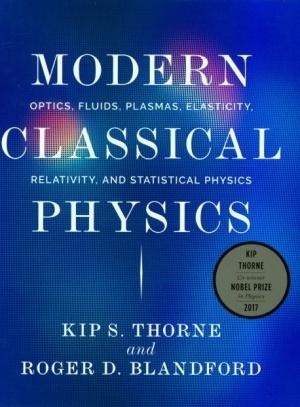
· 제목 : Plasma Physics: Volume 4 of Modern Classical Physics (Paperback)
· 분류 : 외국도서 > 과학/수학/생태 > 과학 > 참고자료
· ISBN : 9780691215501
· 쪽수 : 304쪽
· 출판일 : 2021-06-15
· 분류 : 외국도서 > 과학/수학/생태 > 과학 > 참고자료
· ISBN : 9780691215501
· 쪽수 : 304쪽
· 출판일 : 2021-06-15
목차
- List of Boxes
- Preface
- Contents of Modern Classical Physics, volumes 1?5
- 19 Magnetohydrodynamics
- 19.1 Overview
- 19.2 Basic Equations of MHD
- 19.2.1 Maxwell’s Equations in the MHD Approximation
- 19.2.2 Momentum and Energy Conservation
- 19.2.3 Boundary Conditions
- 19.2.4 Magnetic Field and Vorticity
- 19.3 Magnetostatic Equilibria
- 19.3.1 Controlled Thermonuclear Fusion
- 19.3.2 Z-Pinch
- 19.3.3 Θ-Pinch
- 19.3.4 Tokamak
- 19.4 Hydromagnetic Flows
- 19.5 Stability of Magnetostatic Equilibria
- 19.5.1 Linear Perturbation Theory
- 19.5.2 Z-Pinch: Sausage and Kink Instabilities
- 19.5.3 The Θ-Pinch and Its Toroidal Analog; Flute Instability; Motivation for Tokamak
- 19.5.4 Energy Principle and Virial Theorems
- 19.6 Dynamos and Reconnection of Magnetic Field Lines
- 19.6.1 Cowling’s Theorem
- 19.6.2 Kinematic Dynamos
- 19.6.3 Magnetic Reconnection
- 19.7 Magnetosonic Waves and the Scattering of Cosmic Rays
- 19.7.1 Cosmic Rays
- 19.7.2 Magnetosonic Dispersion Relation
- 19.7.3 Scattering of Cosmic Rays by Alfven Waves
- Bibliographic Note
- PART VI PLASMA PHYSICS
- 20 The Particle Kinetics of Plasma
- 20.1 Overview
- 20.2 Examples of Plasmas and Their Density-Temperature Regimes
- 20.2.1 Ionization Boundary
- 20.2.2 Degeneracy Boundary
- 20.2.3 Relativistic Boundary
- 20.2.4 Pair-Production Boundary
- 20.2.5 Examples of Natural and Human-Made Plasmas
- 20.3 Collective Effects in Plasmas?Debye Shielding and Plasma Oscillations
- 20.3.1 Debye Shielding
- 20.3.2 Collective Behavior
- 20.3.3 Plasma Oscillations and Plasma Frequency
- 20.4 Coulomb Collisions
- 20.4.1 Collision Frequency
- 20.4.2 The Coulomb Logarithm
- 20.4.3 Thermal Equilibration Rates in a Plasma
- 20.4.4 Discussion
- 20.5 Transport Coefficients
- 20.5.1 Coulomb Collisions
- 20.5.2 Anomalous Resistivity and Anomalous Equilibration
- 20.6 Magnetic Field
- 20.6.1 Cyclotron Frequency and Larmor Radius
- 20.6.2 Validity of the Fluid Approximation
- 20.6.3 Conductivity Tensor
- 20.7 Particle Motion and Adiabatic Invariants
- 20.7.1 Homogeneous, Time-Independent Magnetic Field and No Electric Field
- 20.7.2 Homogeneous, Time-Independent Electric and Magnetic Fields
- 20.7.3 Inhomogeneous, Time-Independent Magnetic Field
- 20.7.4 A Slowly Time-Varying Magnetic Field
- 20.7.5 Failure of Adiabatic Invariants; Chaotic Orbits
- Bibliographic Note
- 21 Waves in Cold Plasmas: Two-Fluid Formalism
- 21.1 Overview
- 21.2 Dielectric Tensor,Wave Equation, and General Dispersion Relation
- 21.3 Two-Fluid Formalism
- 21.4 Wave Modes in an Unmagnetized Plasma
- 21.4.1 Dielectric Tensor and Dispersion Relation for a Cold, Unmagnetized Plasma
- 21.4.2 Plasma Electromagnetic Modes
- 21.4.3 Langmuir Waves and Ion-Acoustic Waves inWarm Plasmas
- 21.4.4 Cutoffs and Resonances
- 21.5 Wave Modes in a Cold, Magnetized Plasma
- 21.5.1 Dielectric Tensor and Dispersion Relation
- 21.5.2 Parallel Propagation
- 21.5.3 Perpendicular Propagation
- 21.5.4 Propagation of Radio Waves in the Ionosphere; Magnetoionic Theory
- 21.5.5 CMA Diagram forWave Modes in a Cold, Magnetized Plasma
- 21.6 Two-Stream Instability
- Bibliographic Note
- 22 Kinetic Theory ofWarm Plasmas
- 22.1 Overview
- 22.2 Basic Concepts of Kinetic Theory and Its Relationship to Two-Fluid Theory
- 22.2.1 Distribution Function and Vlasov Equation
- 22.2.2 Relation of Kinetic Theory to Two-Fluid Theory
- 22.2.3 Jeans’ Theorem
- 22.3 Electrostatic Waves in an Unmagnetized Plasma: Landau Damping
- 22.3.1 Formal Dispersion Relation
- 22.3.2 Two-Stream Instability
- 22.3.3 The Landau Contour
- 22.3.4 Dispersion Relation forWeakly Damped or Growing Waves
- 22.3.5 Langmuir Waves and Their Landau Damping
- 22.3.6 Ion-Acoustic Waves and Conditions for Their Landau Damping to BeWeak
- 22.4 Stability of Electrostatic Waves in Unmagnetized Plasmas
- 22.4.1 Nyquist’s Method
- 22.4.2 Penrose’s Instability Criterion
- 22.5 Particle Trapping
- 22.6 ??-Particle Distribution Function
- 22.6.1 BBGKY Hierarchy
- 22.6.2 Two-Point Correlation Function
- 22.6.3 Coulomb Correction to Plasma Pressure
- Bibliographic Note
- 23 Nonlinear Dynamics of Plasmas
- 23.1 Overview
- 23.2 Quasilinear Theory in Classical Language
- 23.2.1 Classical Derivation of the Theory
- 23.2.2 Summary of Quasilinear Theory
- 23.2.3 Conservation Laws
- 23.2.4 Generalization to 3 Dimensions
- 23.3 Quasilinear Theory in Quantum Mechanical Language
- 23.3.1 Plasmon Occupation Number ??
- 23.3.2 Evolution of ?? for Plasmons via Interaction with Electrons
- 23.3.3 Evolution of ?? for Electrons via Interaction with Plasmons
- 23.3.4 Emission of Plasmons by Particles in the Presence of a Magnetic Field
- 23.3.5 Relationship between Classical and Quantum Mechanical Formalisms
- 23.3.6 Evolution of ?? via Three-Wave Mixing
- 23.4 Quasilinear Evolution of Unstable Distribution Functions?A Bump in the Tail
- 23.4.1 Instability of Streaming Cosmic Rays
- 23.5 Parametric Instabilities; Laser Fusion
- 23.6 Solitons and Collisionless Shock Waves
- Bibliographic Note
- App. A Evolution of Vorticity
- 14.2 Vorticity, Circulation, and Their Evolution
- 14.2.1 Vorticity Evolution
- 14.2.2 Barotropic, Inviscid, Compressible Flows: Vortex Lines Frozen into Fluid
- 14.2 Vorticity, Circulation, and Their Evolution
- App. B Geometric Optics
- 7.2 Waves in a Homogeneous Medium
- 7.2.1 Monochromatic Plane Waves; Dispersion Relation
- 7.2.2 Wave Packets
- 7.3 Waves in an Inhomogeneous, Time-Varying Medium: The Eikonal Approximation and Geometric Optics
- 7.3.1 Geometric Optics for a Prototypical Wave Equation
- 7.3.2 Connection of Geometric Optics to Quantum Theory
- 7.3.3 Geometric Optics for a General Wave
- 7.3.4 Examples of Geometric-Optics Wave Propagation
- 7.3.5 Relation to Wave Packets; Limitations of the Eikonal Approximation and Geometric Optics
- 7.3.6 Fermat’s Principle
- 7.2 Waves in a Homogeneous Medium
- App. C Distribution Function and Mean Occupation Number
- 3.2 Phase Space and Distribution Function
- 3.2.1 Newtonian Number Density in Phase Space, ??
- 3.2.3 Distribution Function f (x, v, t) for Particles in a Plasma
- 3.2.5 Mean Occupation Number ??
- 3.2 Phase Space and Distribution Function
- References
- Name Index
- Subject Index
- Contents of the Unified Work, Modern Classical Physics
- Preface to Modern Classical Physics
- Acknowledgments for Modern Classical Physics